Chapter 6: Building an effective learning environment
Announcement
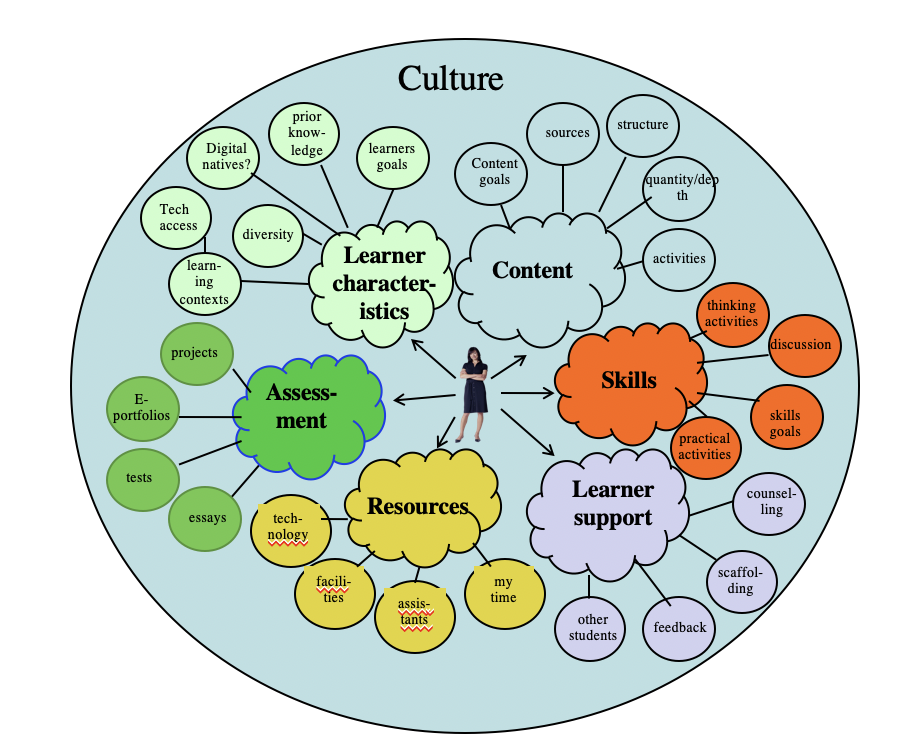
Building a comprehensive and effective learning environment is an important condition for implementing teaching and learning for the digital age. This chapter discusses the key components of a learning environment and how these are affected by developments in a digital age. The chapter covers the following topics:
6.1 Integrating design principles within a rich learning environment
6.2 What is a learning environment?
6.3 Learner characteristics
6.4 Managing content
6.5 Developing skills
6.6 Learner support
6.7 Resources
6.8 Assessment of learning
6.10 Conclusions
Also in this chapter you will find the following activities:
- Activity 6.1 Your students’ learning environment
- Activity 6.2 Influencing a learning environment
- Activity 6.3 Who are your students?
- Activity 6.4 Managing content
- Activity 6.5 Developing skills
- Activity 6.6 Building learner support
- Activity 6.7 What resources matter?
- Activity 6.8 What assessments work in a digital age?
- Activity 6.9 Considering culture in a learning environment
- Activity 6.10 Designing your own learning environment
Key Takeaways
- Context – the learning environment – will influence or determine teaching strategies, as well as epistemology and pedagogy
- Thus to be able to design effective teaching, it is necessary to create an effective learning environment.
- Digital technology allows for the creation of significantly different learning environments from the traditional classroom environment.
- All effective learning environments need a number of different components, and these components will vary, depending on context and the epistemology that drives teaching.